My research treats the recording studio as a site of creative authorship. I work across popular musicology, creative practice research, and the musicology of record production, asking how sounds, technologies, and production practices make meaning, and how they shape the stories we tell about music.
Creative practice
I have been making work around self-imposed limitations for twenty years, and treating that practice as research for most of that time.
The method has not changed much since my PhD. I work in the practice-as-research tradition set out by Barrett and Bolt, describe the work through Brown's modes of compositional engagement, read instruments, technologies, and rooms through Gibson's affordances, and follow Burnard in thinking about musical creativities rather than musical creativity. Constraints hold these ideas together in a nice way: removing the obvious options makes affordances visible, and often brings into view what a singular idea of creativity obscures.
Deliberate Unfamiliarity
Research fellowship, 21st Century Music Practices Network, July to September 2026
For two months I am working only with two machines I do not know how to use, a Behringer LM Drum and a Hologram Microcosm, stepping away from a trained keyboard player's comfy relationship to tonality, harmony, and melody.
The question is what kinds of musical thinking are portable across interfaces and what are interface-specific: how much of what a trained body knows belongs to Merleau-Ponty's habitual body, and how much to the instrument. Gibson does the other half, since an unfamiliar machine is one whose affordances have to be found rather than assumed.
Outputs are going up on SoundCloud as the work happens. Eventually the full reflection and analysis will be published on the C21MP Open Research Project platform.
Dark Park
With Lara James, 2021 to 2024
Feminine psychogeography in Cardiff and London, made with the saxophonist Lara James after the murders of Sarah Everard, Bibaa Henry, Nicole Smallman, and Sabina Nessa. We recorded at named sites at the hour a woman would pass through them, the Cardiff Bay barrage at 20:24, a city centre car park at 21:50, Poynders Road at 17:46, and retraced Sarah Everard's route across Clapham Common, and we made music and sound in response to how we felt. The material was later worked up at the Visconti Studio.
We presented Dark Park five times, ending on the Acoustic Witnessing panel at In the Field 2, CRiSAP's symposium at the University of the Arts London, July 2024.
It was never released. What exists is seven short films, each shot at one of the sites with the music as its soundtrack, and whether that is the right, final form the work should take is a question Lara and I have never settled. Maybe it will continue?
Watch Dark Park
Bird Rib
2020
This project reused the tapes from the Rococochet sessions, running them slower, faster, and backwards, working with and against what was already there.
Rococochet
2017. Recorded at the Visconti Studio
My first time working with tape, and without the digital affordances my practice had been built on. Losing the comfort of endless revision gave me a new awareness of momentum, flow, and the value of linear intention.
Folio of Compositions and Critical Commentary
PhD, University of Queensland, 2014
Five works, each built around a different constraint: Feather Hammer, for one piano, listening past the notes to the other sounds it makes and the sounds around it; Machines, a song cycle with spam emails for lyrics, looking for truth inside nonsense; Three Preludes, written to be processed through another player and rebuilt from the offcuts; Kick, for string orchestra, written on paper with no computer, translating record production effects into notation; and You Can't Hide Beat, an EP of David Bowie covers made from samples of his own recordings.
Women's authorship in the studio
Who is recognised as the author of a record's sound, and how has gender shaped that?
Women's erased labour in British recording studios
Britain's recording studios of the 1960s to 1990s shaped global popular music, and that golden age is remembered almost entirely through its male producers and engineers. Women were there too, as tape operators, engineers, fixers, and managers, but they have been left out of the record.
So the project begins from a simple question: where were the women, and what did they do? From there it asks how that labour was valued, paid, and credited at the time; how and why it came to be absent from the historical record; and how women built and sustained working lives, and navigated exclusion, across four decades of technological and economic change. These build towards the central question: what does recovering this labour reveal about how a studio's sound and standing were produced, and about how gender shaped who did the work and who was remembered for it?
The project uses oral history, data and archive analysis to recover and preserve stories of women's labour in the history of British studio recording.
A Feminist Historiography of Digital Samplers and Sampling
Chapter, The Oxford Handbook of Sampling in Popular Music, edited by Paul Harkins, Anne Danielsen, Ragnhild Brøvig, and Nick Prior. Oxford University Press, forthcoming
A chapter examining how gender and race have shaped the design, use, and cultural reception of digital sampling technologies across four decades. Drawing on Judith Bennett’s concept of patriarchal equilibrium, it asks why every door the technology seemed to open for women kept closing again somewhere else. It argues that digital sampling is not just a neutral, technical tool of democratisation, but a technology whose scripts, discourse, and conditions of use have consistently reproduced the mechanics of patriarchal and colonial extraction.
Kate Bush's Hounds Of Love
33 1/3, Bloomsbury, 2024
Bush built her own 48-track studio because there was no other way to get the control she wanted, and Hounds Of Love (1985) is the first record she made in it. That autonomy expanded the palette of her songwriting: pioneering studio technologies turning intimate songwriting into world-building, across two sides that move from desire to drowning to rebirth. It became a model for the women who came after. She is still widely described as a singer and songwriter. I make the case for Kate Bush the producer.
Bowie studies
The Bloomsbury Handbook of David Bowie
Editor, Bloomsbury Academic, forthcoming
An interdisciplinary collection on Bowie's lifetime of work and legacy, and an attempt to map Bowie studies as a field. Four sections: Music, tracking the catalogue across five decades; Cultural and Historical Contexts, from queerness and fashion to technology and English identity; Creative Practices, including the acting, painting, and writing; and Narratives, on identity, transformation, and impermanence.
Bowie and the Canon of Classical Music
Chapter, The Cambridge Companion to David Bowie, edited by Denis Flannery. Cambridge University Press, forthcoming
Classical traces across Bowie's catalogue: experimentalism, harmonic language, musical haunting, and vocal delivery, and what is at stake in his conversations with the canon.
Late Bowie: legacy, mortality, and the archival impulse
Conference convenor, with Matt Melia. Kingston University, 5 and 6 November 2026
Keynotes from Jonathan Barnbrook, Peter Carpenter, and Harriet Reed and colleagues from the V&A's David Bowie Centre.
Excavating The Next Day: Bowieism and the sounding archive
Keynote, The Sounds, Visions and Words of David Bowie, University of Agder, Kristiansand, 29 September 2026
Blackstar Theory: The Last Works of David Bowie
Bloomsbury Academic, 2022
I treat Bowie's final works, The Next Day (2013), the musical Lazarus (2015), and ★ (2016), as sophisticated assemblages of sound, image, text, performance, and cultural memory that demand to be read in dialogue with his fifty-year career. I argue that they enact individuation, Jung's term for the integration of the self, by subjecting his star image, catalogue, and persona to a creative cut-up and reassembling the fragments into a final cohesive statement on identity, mortality, and transcendence.
Bowie musicology: mapping Bowie's sound and music language across the catalogue
Continuum: Journal of Media & Cultural Studies 31(4), 552–563, 2017
The Visconti Studio
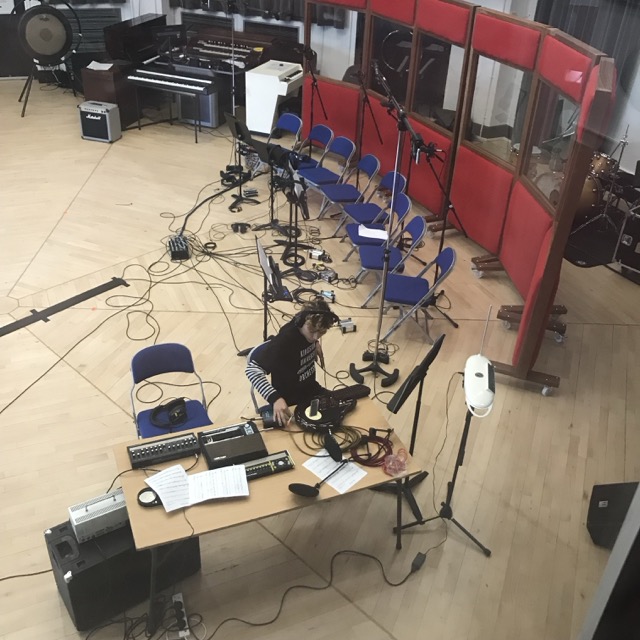
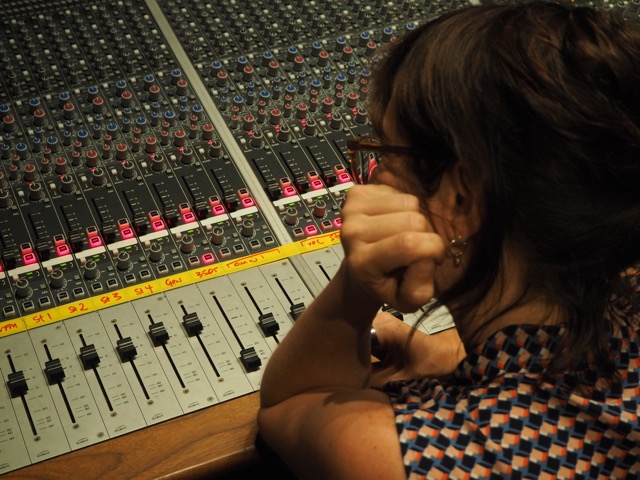
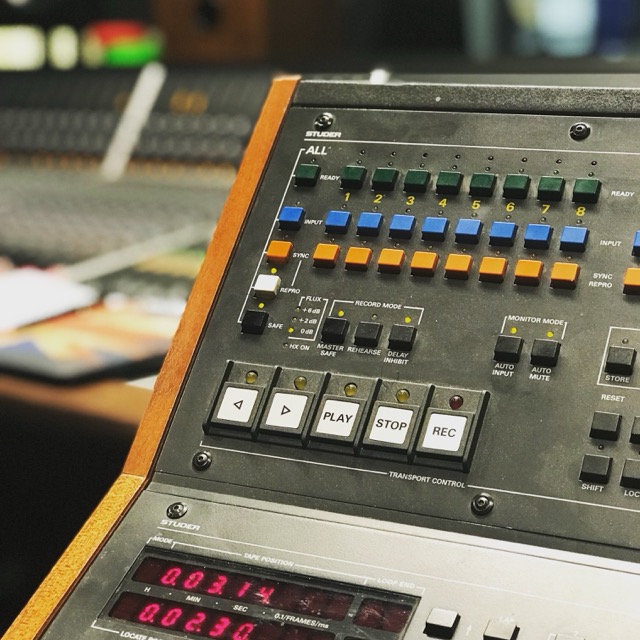
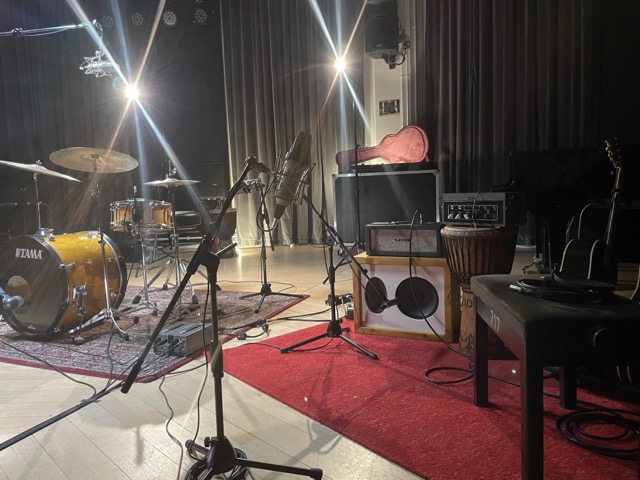
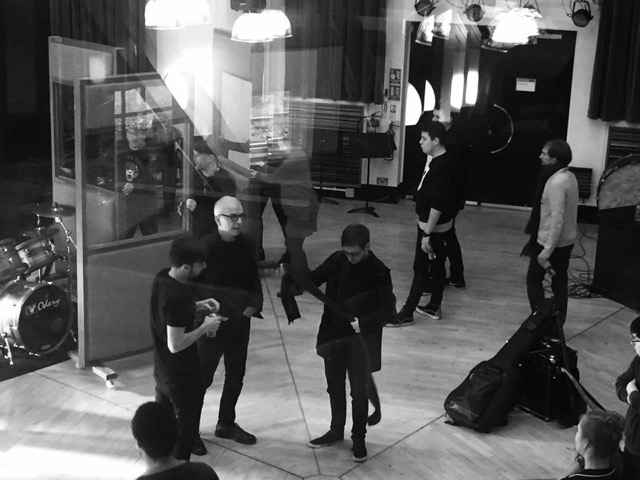
Co-founded in 2016 with Isabella van Elferen and producer Tony Visconti, and directed since 2022. A teaching, research, and knowledge exchange facility built around analogue and hybrid recording, and the site of most of the practice research above.
Constructing "Feel": A Multi-Method Pilot Study of Gaze, Distributed Agency, and the Recording Studio
With George Reid, Rob Plummer, Adrian Bandy, Jarek Francik, Farzana Rahman, and Oded Ben-Tal. Journal of Music Production Research, forthcoming
Feel, groove, and vibe describe qualities essential to good music and resist definition. Tracking a live ensemble recording across takes, using ethnographic observation, machine gaze analysis, and audio comparison, we found that visual coordination between players decreased in the takes chosen for the final record. The takes that generated the most excitement in the room at the time were not chosen for the edit. We argue that feel in recorded music is not necessarily captured from performing bodies but constructed through a chain of production decisions.
Circadia
With On The Record CIC and Kingston Nursing, 2026
Circadia distils a century of nursing and midwifery oral histories into a single twenty-four hour shift, sequenced to clock time with a light sculpture marking the hours. It is led by Louise Howard in Nursing with On The Record CIC, and its aims are clinical and educational.
I am attached as a collaborator providing the facility. My interest as a researcher is in what immersion and Pauline Oliveros's deep listening can do in therapeutic and reflective contexts, and in what the recording environment itself contributes to what the work is able to reveal.
A six-hour section was shown at the Stanley Picker Gallery in March 2026, supported by Kingston's KERI fund, with an overnight version planned for 2027.
Supervision
I supervise doctoral researchers in popular musicology and creative practice, and I am close to capacity.
The projects I am best suited to: creative practice research in studios and with music technology; popular musicology and analysis; women and minorities in music cultures, and Bowie studies, which is an emerging field.
Editorial and professional
Associate Editor, Field Notes, Journal of Popular Music Studies
Society for Music Production Research
International Association for the Study of Popular Music
21st Century Music Practices Network
Community Partner, Audio Developer Conference
Senior Fellow, Advance HE
Publications
The full and current list is on Pure and Google Scholar.